
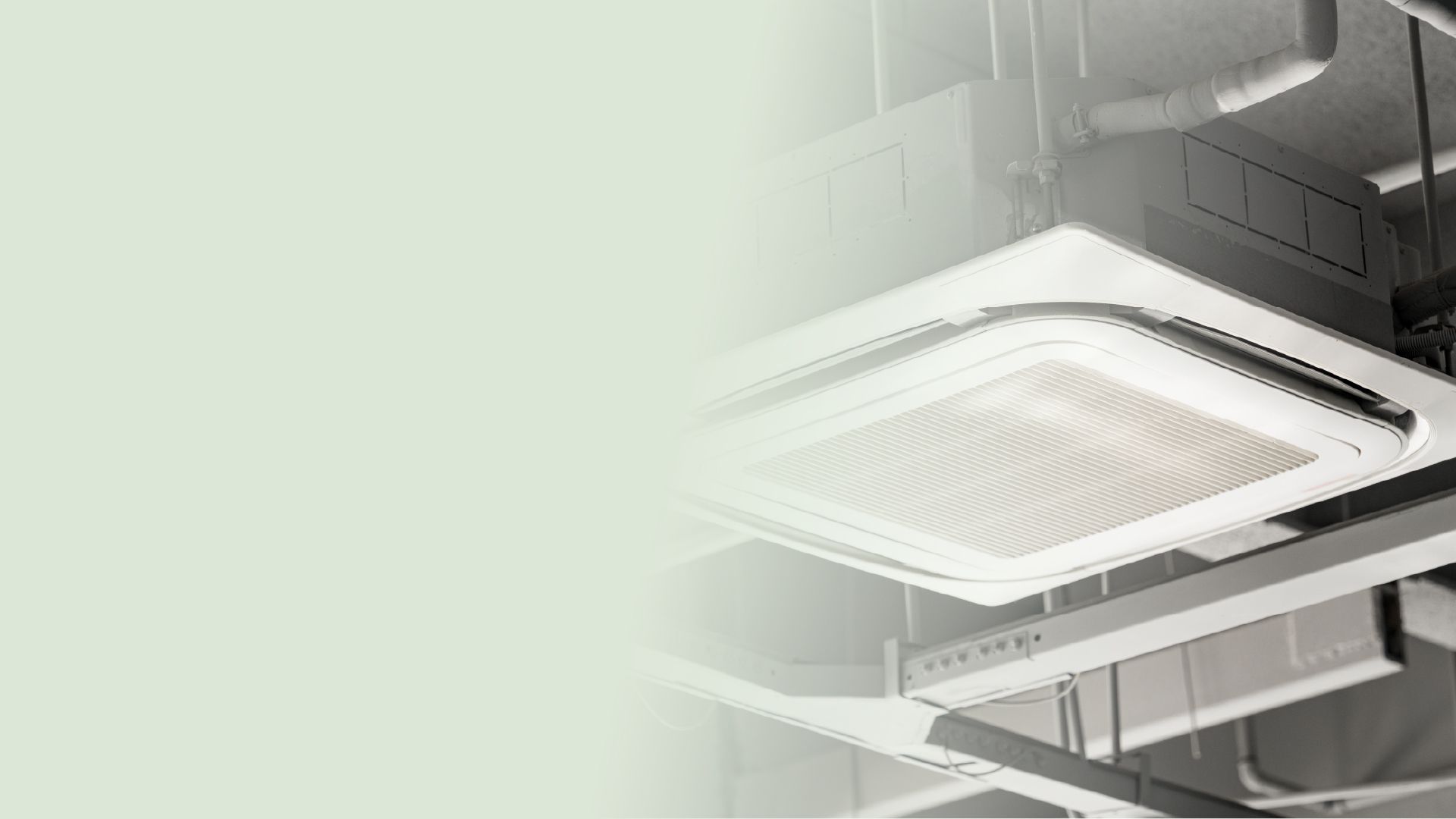
HVAC Systems & Indoor Air Quality
Your HVAC system does more than heat and cool your home—it also influences the quality of the air you breathe.
Heating and cooling equipment plays an important role in maintaining comfort, but its impact extends far beyond temperature. Airflow, filtration, humidity, ventilation, and system cleanliness all influence your home’s indoor environment.
When to Assess
When Should You Consider an HVAC Air Quality Assessment?
Many indoor air quality concerns involve more than the HVAC equipment itself. Environmental conditions throughout the home can influence how efficiently your heating and cooling system distributes and filters the air your family breathes.
An assessment may be appropriate if you’ve noticed:
- Persistent dust throughout the home
- Allergy or asthma symptoms that worsen indoors
- Uneven airflow between rooms
- Musty odors from supply registers
- Excess humidity or condensation
- Rooms that feel stuffy or poorly ventilated
- Recent mold or water damage
- Dirty or damaged ductwork
- Frequent filter replacement
- High indoor humidity
- Concerns after purchasing a home
- General concerns about indoor air quality
Not every air quality concern originates with the HVAC system. Understanding how the entire home functions together often provides the clearest path toward long-term improvement.
Building Science Approach
HVAC Systems Are Part of a Larger Environmental Picture
Many homeowners assume their HVAC system alone determines indoor air quality. While heating and cooling equipment plays an important role, the system is only one component of a much larger indoor environmental system.
Healthy Home Restoration evaluates how the HVAC system interacts with the rest of the home to understand where environmental conditions originate, how they move, and what may need to be corrected.
What We Observe
We begin with the conditions homeowners experience and the environmental factors that can be measured or observed.
Where It May Originate
We look beyond the HVAC equipment itself to identify environmental conditions that may be influencing the system.
How the Home Responds
We evaluate how air, moisture, and pressure relationships influence conditions throughout the home.
What Should Be Corrected
Findings are translated into practical recommendations focused on environmental conditions rather than HVAC repair.
The goal is not simply to evaluate the HVAC system. It is to understand how the system interacts with moisture, airflow, filtration, and the rest of the home’s indoor environment.
What an HVAC Air Quality Assessment Can Include
Indoor Air Quality Measurements
Evaluation of airborne particulate levels and general indoor environmental conditions.
Moisture Assessment
Identification of elevated moisture levels that may contribute to mold growth.
Humidity Evaluation
Measurement of relative humidity throughout affected areas.
Thermal Imaging
Infrared technology helps identify hidden moisture patterns that may not be visible during a visual inspection.
HVAC System Evaluation
Inspection of airflow, filtration, and conditions that may contribute to indoor air quality concerns.
Crawlspace Evaluation
Assessment of moisture, contamination sources, vapor barrier conditions, and environmental influences beneath the home.
Mold Investigation
Visual evaluation for conditions favorable to microbial growth.
Air Sampling (When Appropriate)
Laboratory air sampling may be recommended when warranted by the findings or when documentation is requested.
Surface Sampling (When Appropriate)
Surface sampling may be recommended when microbial growth requires laboratory confirmation.
More Than Equipment: Understanding the Environment
The goal of an HVAC air quality assessment isn’t simply to evaluate heating and cooling equipment.
It’s to understand how environmental conditions throughout the home influence the air your family breathes.
Following your assessment, recommendations may include:
- Airflow improvements
- Filtration recommendations
- Humidity management
- Crawlspace recommendations
- Moisture control strategies
- Ventilation improvements
- Indoor environmental recommendations
- Follow-up testing when appropriate
Rather than focusing solely on HVAC components, we explain how multiple environmental factors interact so recommendations address contributing conditions rather than isolated symptoms.
Air Quality Is More Than Your HVAC System
One of the most common misconceptions is that replacing HVAC equipment alone will solve every indoor air quality concern.
In reality, air quality is often influenced by conditions elsewhere in the home, including moisture intrusion, crawlspace environments, ventilation, filtration, and building pressure relationships.
The HVAC system may distribute air quality problems, but it is not always the original source of the problem.
Our goal is to recommend the most appropriate level of evaluation for your home based on the conditions observed—not assumptions.
Why Homeowners Choose Healthy Home Restoration
Frequently Asked Questions
Yes. HVAC systems influence airflow, filtration, humidity, and ventilation, all of which contribute to indoor environmental quality. However, many concerns originate elsewhere in the home and are simply distributed by the HVAC system.
No. Healthy Home Restoration evaluates how HVAC systems influence indoor environmental quality as part of a comprehensive building science assessment. If mechanical repairs are needed, we may recommend working with a qualified HVAC contractor.
Not every home requires duct cleaning. The need depends on the condition of the ductwork, environmental influences, and the findings of your assessment.
Yes. Many HVAC systems or ductwork pass through crawlspaces, allowing moisture, contaminants, or other environmental conditions beneath the home to influence indoor air quality if not properly managed.
Not always. While new equipment may improve airflow or efficiency, underlying moisture, ventilation, filtration, or environmental issues can continue affecting indoor air quality if left unaddressed.

Looking Beyond the HVAC System
Healthy indoor air is influenced by more than heating and cooling equipment. Healthy Home Restoration evaluates how HVAC systems interact with airflow, moisture, ventilation, and the home’s overall environment to provide recommendations based on building science, not assumptions.